Further images from retreat

I could not figure out what to do with all these pictures I took, some of which turned out nicely.  So, here is a random assortment of photos of the grounds of the Chapin Mill Zen Center.

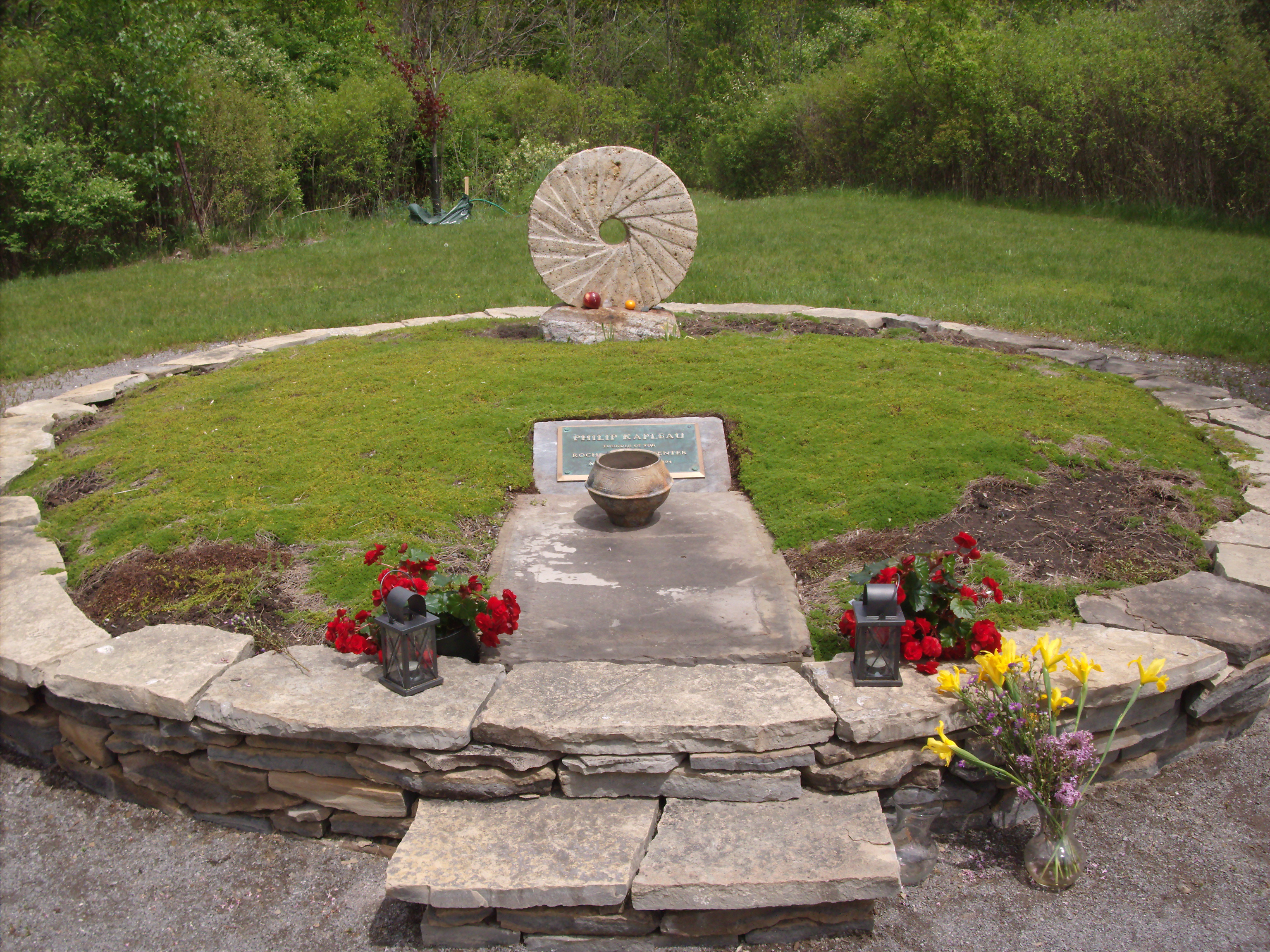
This was the Chapin Mill stone.  It was in a beautiful little garden memorial on a slight rise on the Zen Center property.  The memorial was to the founder of the Center.


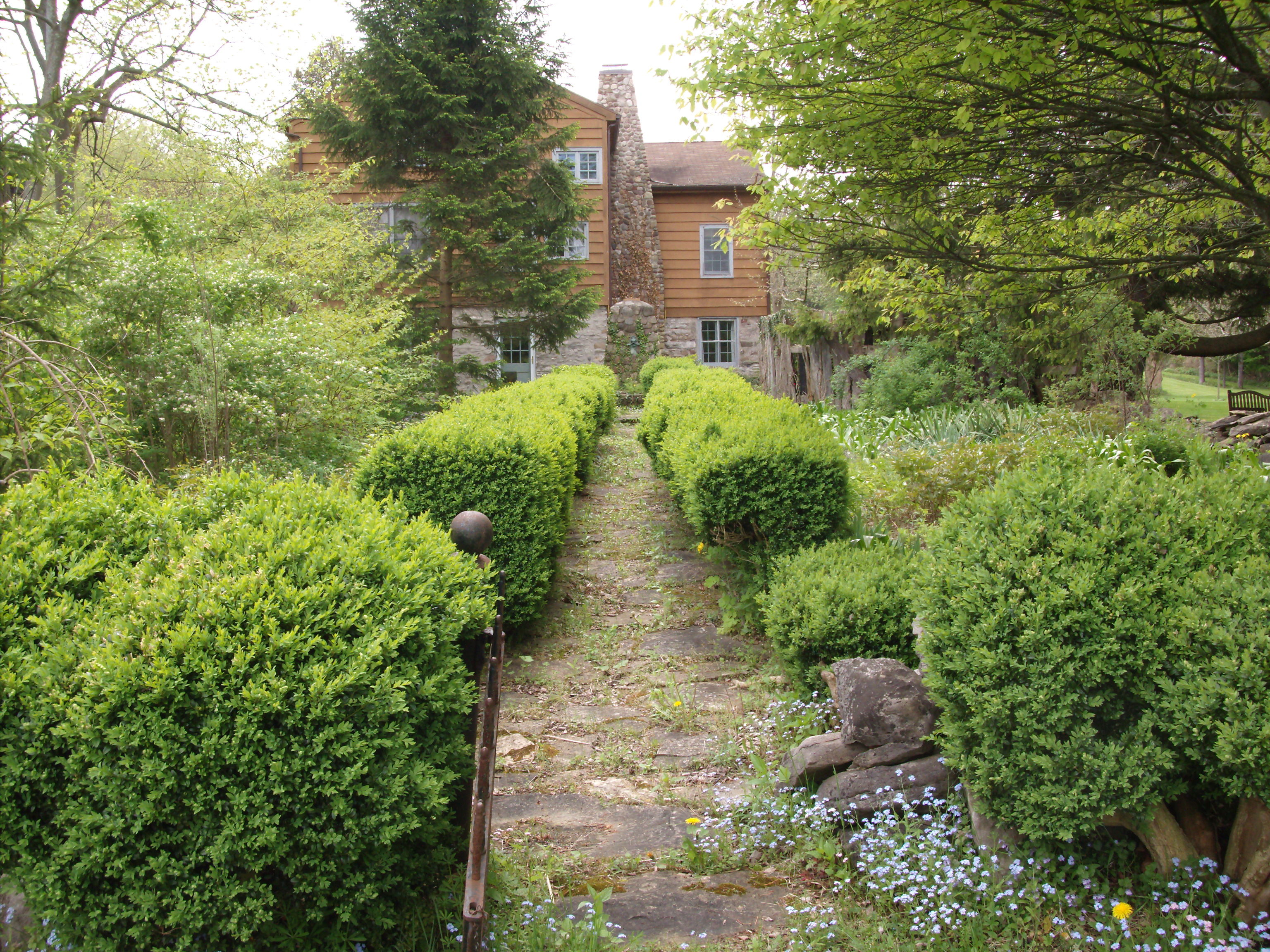
The Zen Center was surrounded by several beautiful little gardens.  One of which led to the old mill house through a row of boxwoods.


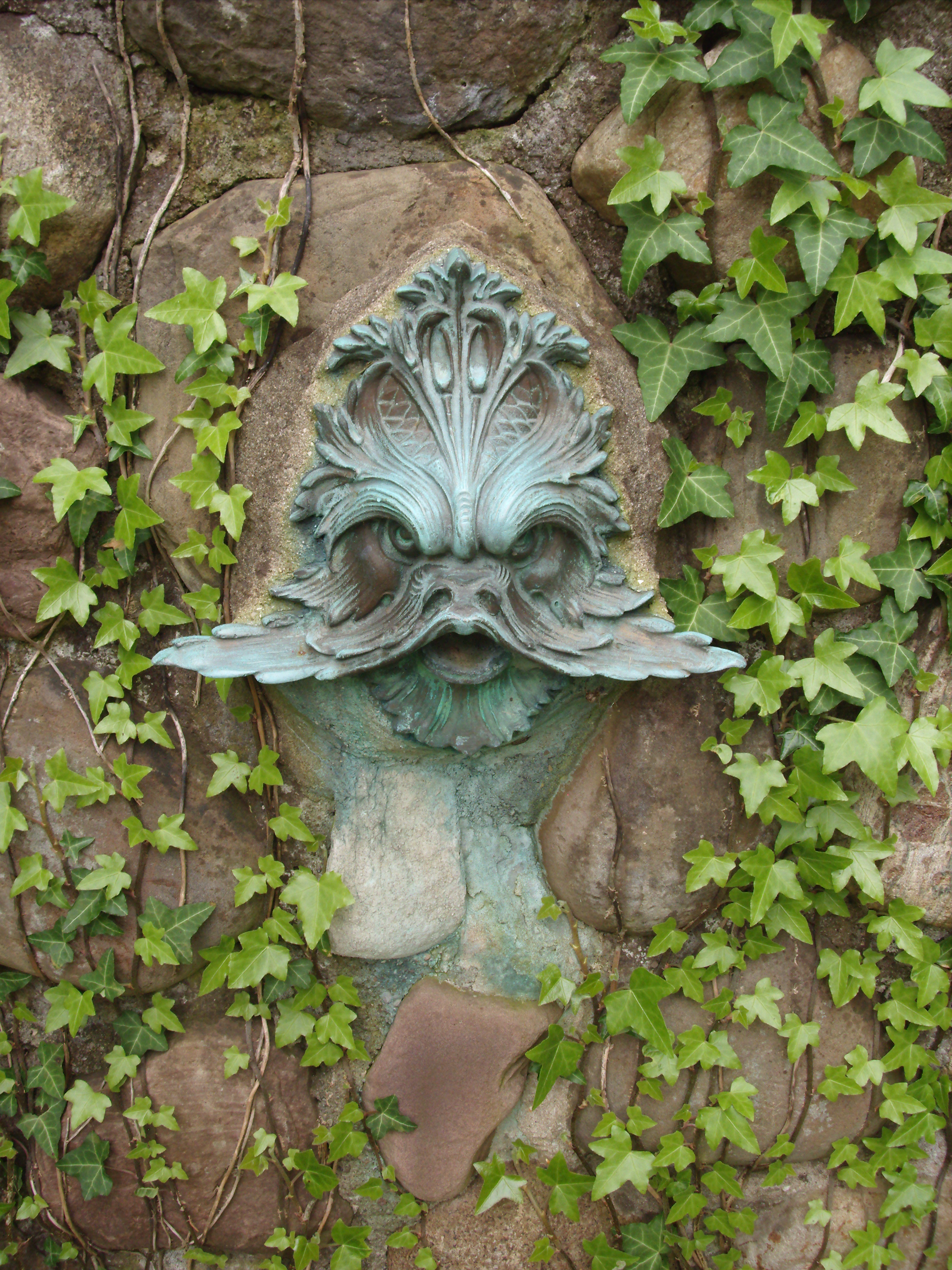
Having gone through the boxwoods, one came upon a curious stone fixture.  This fountain head looking contraption was on the back of what was actually a chimney for a grill.  Not sure what the fountain head piece was doing there…


As I mentioned previously, there were serene meadows with benches scattered throughout.  Plus the Chapin Mill Center was on land known as the Seven Springs (or so I heard anyway).  I don’t doubt this as there seemed to be little springs gurgling in abundance.  There were also benches near the springs and creeks.


I got a glimpse of a rattlesnake escaping into a garden near the boxwoods above.  It was a curious sight – I only caught the second half of the snake, so I saw a dry, scaly tail and had no idea what I had just discovered.  Luckily, I did not follow my foolish thought to pursue the creature.  I put two and two together when I realized I had seen a sort of dry, bulbous end to its tail and someone else mentioned that they had seen it.  How auspicious nonetheless!


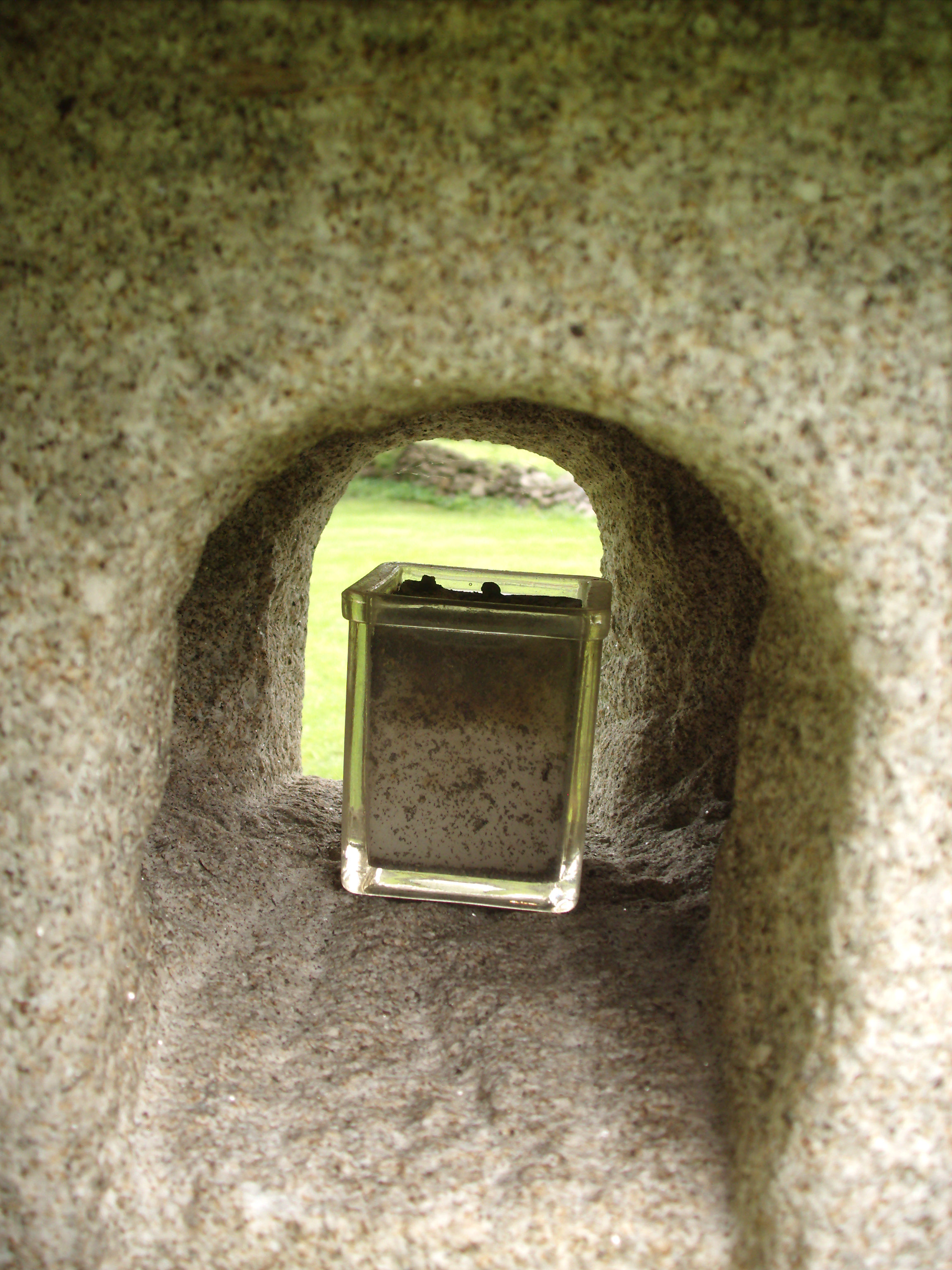
There was a little stone pagoda looking feature near the pond.  And peeking inside, I found this candle.  I like the enigmatic stone passage way here.

If you get the chance to visit Chapin Mill Zen Center, I think I’d recommend it.  From a gross stand point, the beauty is more subtle and refined, so it might take a few minutes to slow down enough to take it all in.  But in a Zen manner, the subtleties and sparkles are still with me as I reminisce.  I am grateful for my time there.

Vajrakilaya Tormas

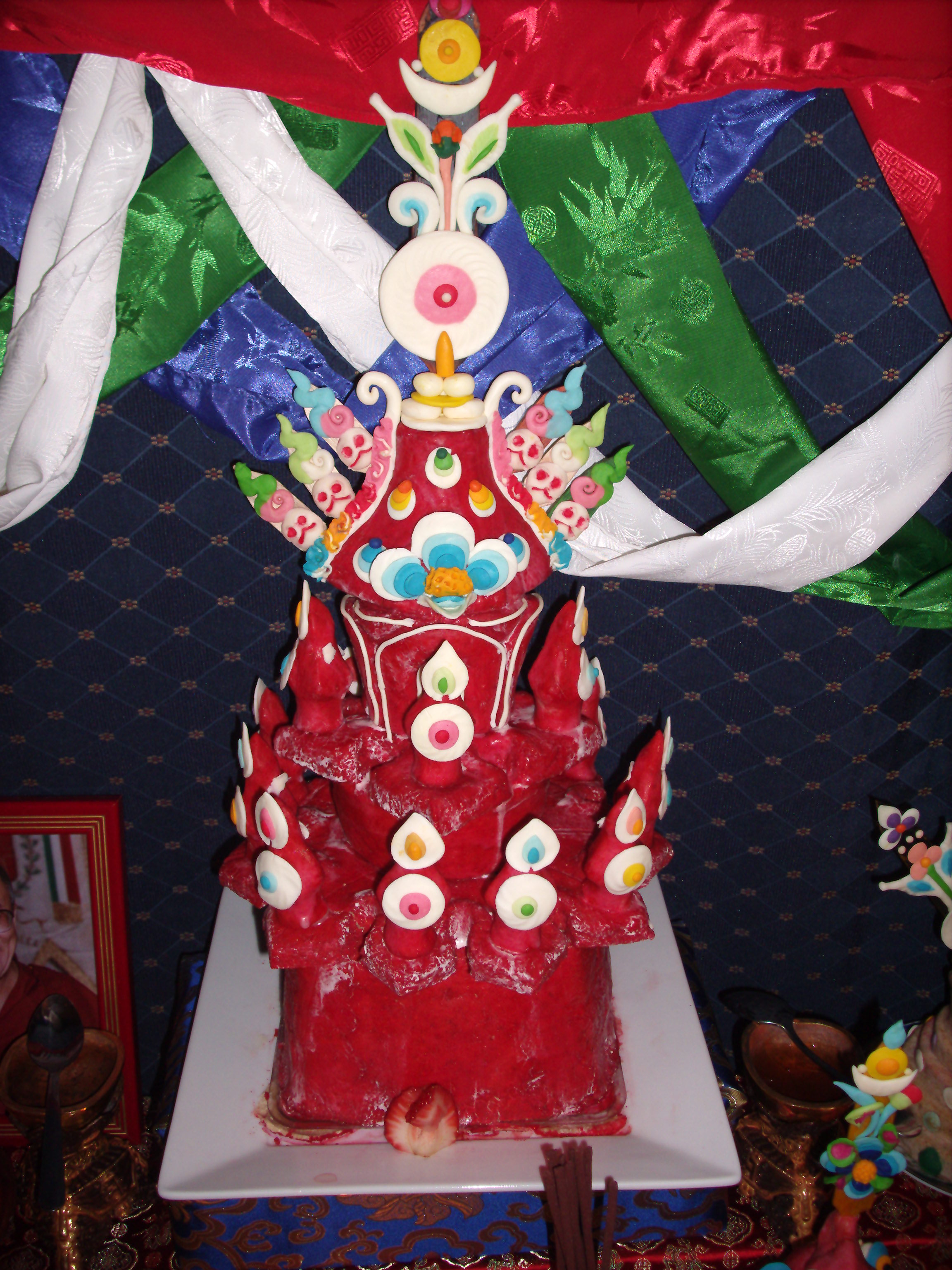
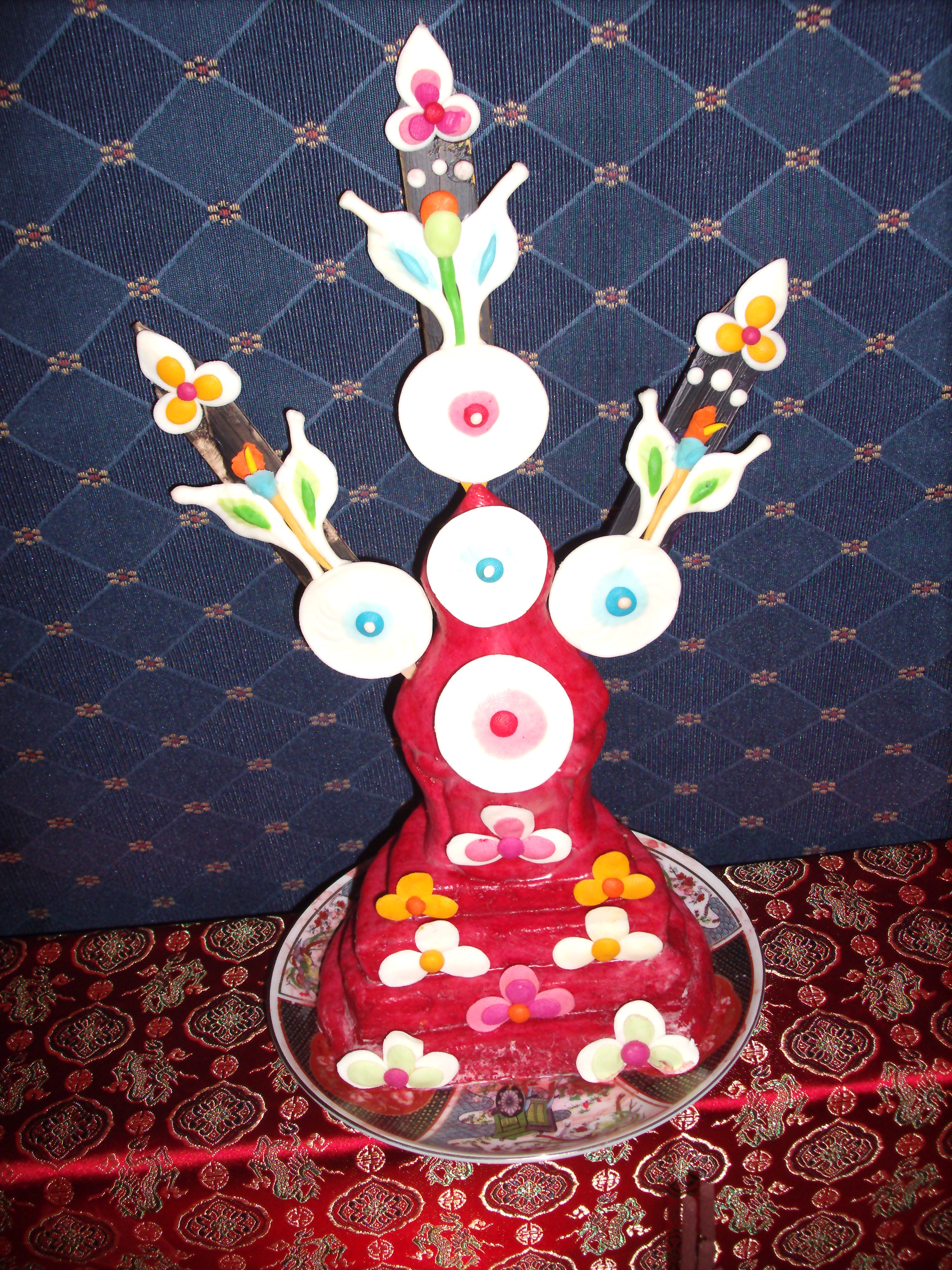
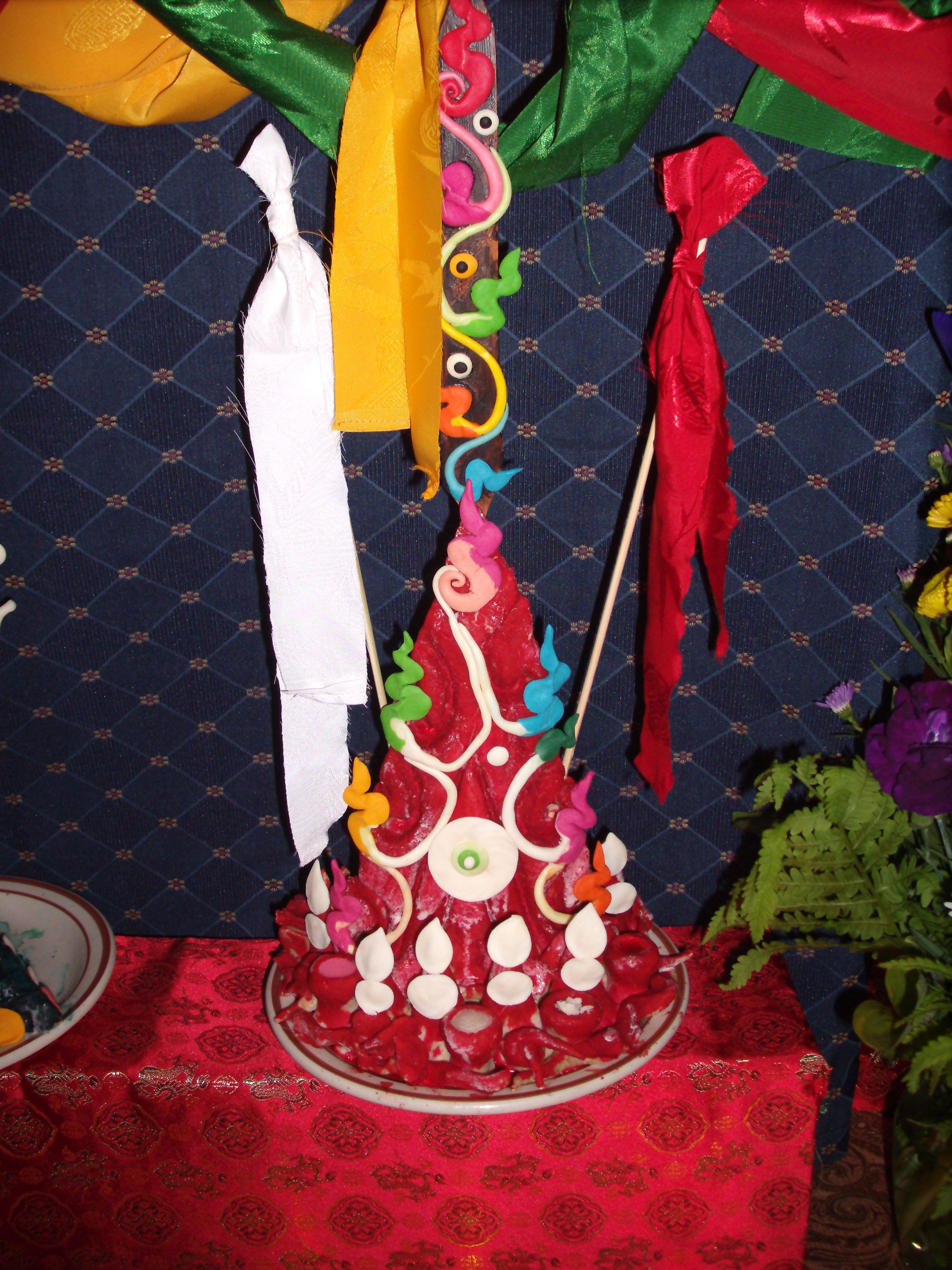
These are images of tormas from the Vajrakilaya mandala and shrine, from a retreat in Batavia New York.  Sponsored by the White Lotus Dharma Center of Rochester New York.

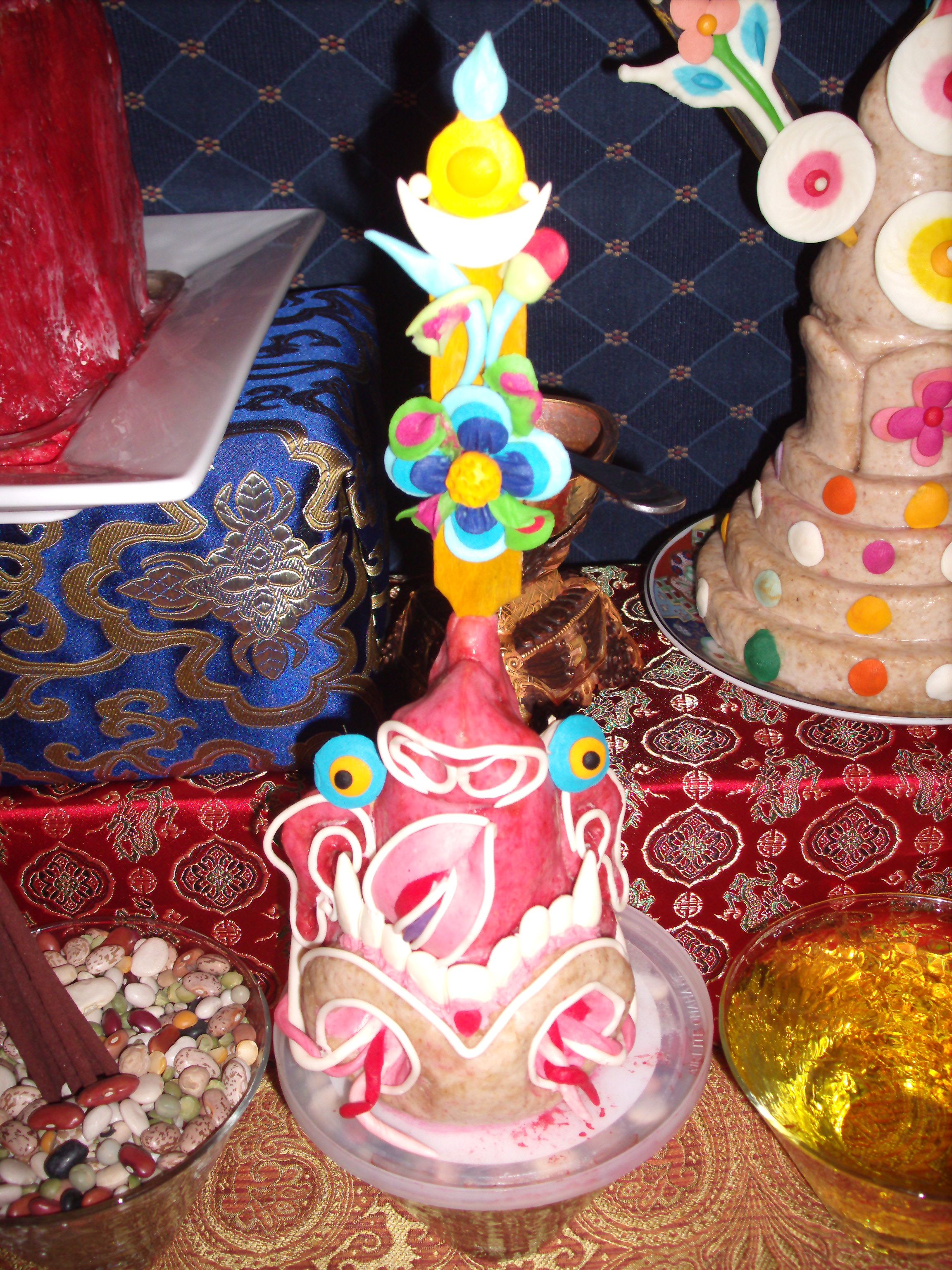
Some of the tormas were more “typical” of tormas I have seen at other retreats and monasteries.  However, on the Vajrakilaya mandala, there were two tormas which I should have asked about.  I will put both of these pictures next:

This torma at right seems to have the base of a distorted face – eyes askew, large teeth, and tongue flopping up.  If you know what this symbolism represents, can you leave a comment please?

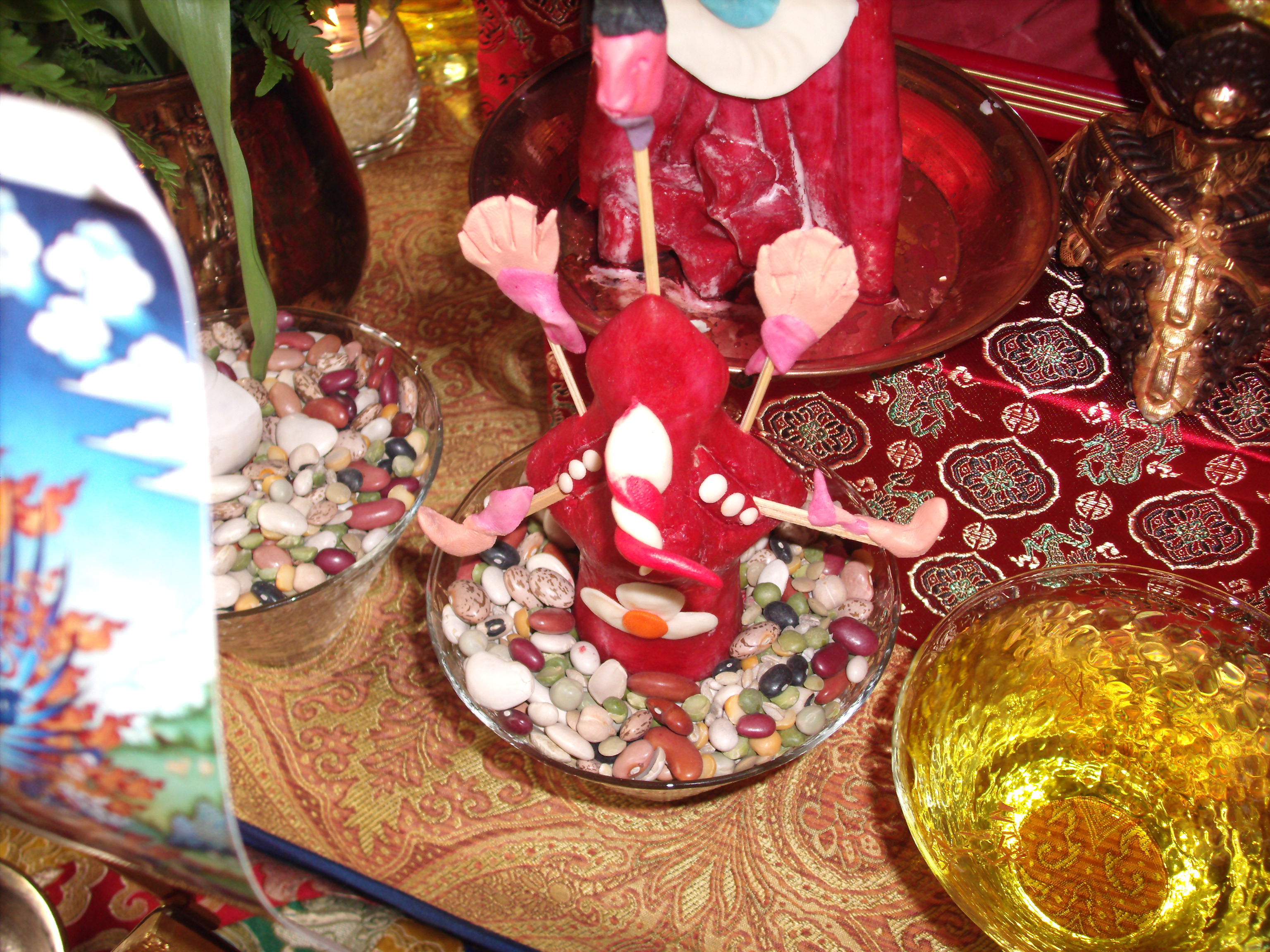
Then, there was a torma which is pictured below:

This torma seemed to have little hands and feet on it!

I would bet that at least one of these tormas, in a different country, in a monastery would have actual animal parts incorporated in it.  I refer the reader back to my posts on a Pilgrimage to Ladakh India.  At a monastery there, I saw dried intestines at the base of a large torma (I believe those tormas were for a Mahakala puja).  Garchen Rinpoche mentioned that this mandala was not complete (due to having only one monk helping with the preparation of it), but he did say that it was definitely sufficient to invite the wisdom beings to reside in it.

Garchen Rinpoche mentioned that there were four tormas on this particular mandala which had to do with the four directions and the four types of Buddha’s activities:

From RigpaWiki.org: ”

Four activities (Wyl. las bzhi) — the four activities of pacifying, enriching, magnetizing, and subjugating, which are practiced as part of the deity yoga of the inner or higher tantras. Practitioners visualize themselves in the form of the deity and train in:

  • pacifying conflict, sickness and famine,
  • increasing longevity and merit,
  • magnetizing the three realms and
  • subjugating hostile forces,

often through the emanation of rays of light. Once accomplishment has been reached, these four activities are carried out directly as aspects of enlightened activity for the benefit of others.”

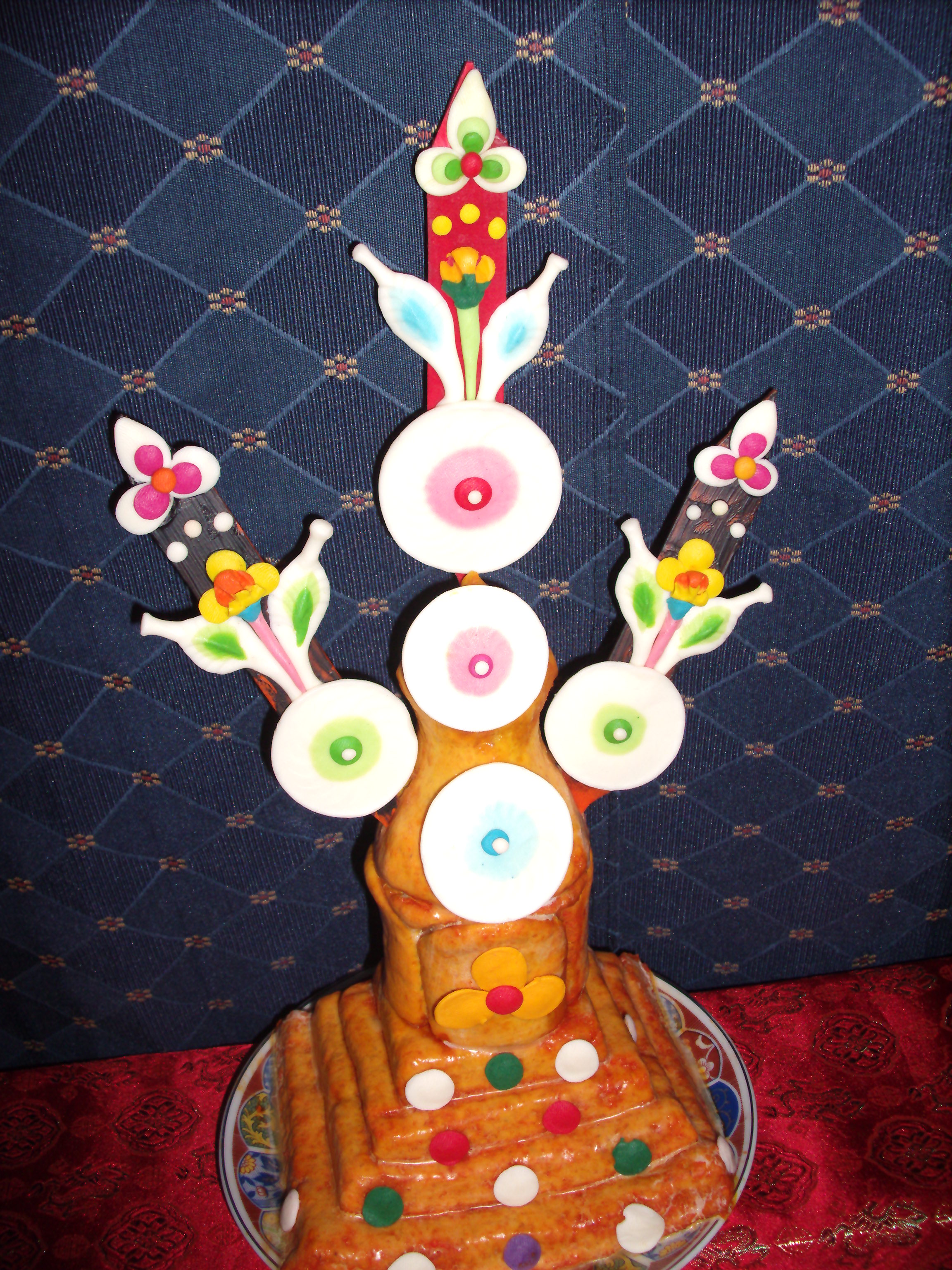
I forget which colors went with which activities, and if you look it up on wikipedia, it seems to be a little off.  I do know that Yellow is associated with Ratnasambhava Buddha (south), Red with Amitabha Buddha (west), Green with Amogasiddhi Buddha (north) and White with Vairocana Buddha (east?).  I guess that would leave Blue to be in the center as Akshobya Buddha.  You can see that generally there was one of each of the four colored tormas in the four cardinal directions (you can’t see the directions, but you can see the colors).  So finally, here are two more pictures:

And the last (directional) torma:

What have I learned post retreat?

This material is copyrighted by M. Kirby Moore.  Reproduction without permission is prohibited.  Thank you for visiting.

It may be a bit premature in writing about this topic, as a mere five days have passed.  And actually, not counting the sleepless day of transit from New York to Virginia, this is my first day off of work…  So, I have had to take little tiny breaks to reflect.

The first thing I learned was very obvious the first day back at work (home from retreat).  When doing an extremely potent practice like Vajrakilaya, I need to give myself at least two – three days of complete down time to integrate.  I almost got myself fired.  And this is coming from someone who, in the past would easily have accused himself of being a charming, super-nice, pleasing individual.  Yeah, this practice of wrathful compassion stirred my pot, and so much so that I would not recommend it to anyone with less than five to ten years of authentic practice under their belts.  At least give yourself some time to investigate how big the fire is before you dive into it!!!  Seriously.  Of course, then you must ask yourself, “why am I diving into a fire in the first place?”

Second, if I have delusions around my heart about anything, doing a potent retreat like this will constantly bring up those said delusions with the intention of clearing and dispelling them.  Enough said.  Ouch!

Third, it is my intention to participate fully in life.  Sometimes in the past I have held back just a little, but this withdrawal quickly adds up and I found myself sitting on the outside looking at a circle of dancers who were enjoying themselves.  Not anymore.  I don’t care how I look, I don’t care what I am wearing, I want to immerse myself in life.  I will keep a balance between restraint (I feel this is the first necessary ingredient to a spiritual life) and pleasure, discipline and letting go.

What does this have to do with the retreat?  Well, basically I learned to take myself and my thoughts and my (annoying) patterns that much less seriously!  Ha!

Fourth, always take pictures and have a camera ready in the event of a fascinating video opportunity.  No matter what I am feeling like deep down.  The first couple days of retreat were full of resistance and inner turmoil, not unlike other retreats, but in choosing to withdraw from the beauty around me, I missed it!  At the Zen Center, there were strands of little bells hanging down from the gutters, and on those first two days, it rained.  Well guess what – that would have made an awesome video to see the water works in action.  They were so peaceful to watch!  Sorry I missed the chance to photograph them.

Fifth, my life has become incredibly fluid.  At my job, where I work at a moderately busy fine dining room, we never know what to expect and we must stay on our toes to react to any type of individual customer.  In my life of travel plans, people invite me to do something down the road, and then two weeks later, they tell me they have to stay home and do something else.  Romantically, I think one thing is going to happen, and I am taken by surprise.  I am beginning to realize it would be best to completely let go of expectations!  If I don’t need to decide something right now, then there is no use thinking about it.  Just let my mind rest down, easy, letting go of any and all mental grasping.  I remember the quote by a Native American Indian wisdom holder, that one needs to let go of the edge of the river and just allow themselves to drift out into the current and see where it takes them.  Well, I thought I had this down.  But I am just getting started.

Organization of the Vajrakilaya Retreat

This material is copyrighted by M. Kirby Moore.  Reproduction without permission is prohibited.  Thank you for visiting.

Having participated in multiple larger retreats with the Tibetan Meditation Center in Frederick Maryland, I was fascinated to see how another center would run a large retreat like this.  I was not disappointed in the least!  This retreat was very seamless in all its aspects.  Personally, I was well-informed, at least about the big stuff, from the time I originally registered to the time I departed, and I was able to get my questions answered rapidly.

My only question and / or concern is that this particular practice is a very potent one.  It is not for everyone.  Any kind of Wrathful (Compassion) Practice requires that the participants have spent a lot of time developing their own practice of loving-kindness and compassion.  I would even go so far as to say that many practitioners would recommend stabilizing a solid practice of Bodhicitta before starting Vajrakilaya practice.  Garchen Rinpoche really emphasized that loving kindness and compassion are vital before starting.  I have also heard it from His Holiness the Dalai Lama, Khenchen Konchog Gyaltsen, Drupon Thinley Ningpo and Khenpo Tsultrim Tenzin, among others.

Therefore, my question is this: whenever a potent practice like this one is going to be held, is there some way to screen participants?  And another question is arising as well – do we want to have beginners participating in something like this?  I don’t know the answers to these questions, but I have had conversations with different individuals about this topic.

In this particular retreat, there were no (obvious) mental health issues.  However, I have attended other Drupchens where issues have arisen.  Therefore I wonder if somehow people were screened prior to registering for a retreat of this type.  Personally I was not asked anything ahead of registering, so I suspect not.  Now, the argument could be made that this retreat was private, and that it was not broadcast to many thousands of people, so you could say that only those individuals with the karma to be there attended.  Sure.  And you might say that if someone knew about someone’s prior mental health issues, perhaps they would have been requested to attend another teaching instead.  I don’t know.  I just bring this up as these practices definitely stir the psycho-spiritual cauldron as it were (and again, they are not for everyone).  I am simply raising this question, and I wonder how other centers handle this potential issue.  And in another post, I might mention a conversation I had with one of the teachers who mentioned that he was happy to have “crazy people” attending Dharma teachings.  So it might be a complete non-issue (and it may just be my personal afflictions that cause me to project my neuroses onto the world…).

I’m not trying to suggest something either way here, I just want their to be a way to benefit people in case they attend a potent retreat and something major arises for them [subtext – if someone finds themselves in way over their head, what are they to do?  If they do not have the background of solid Bodhicitta practice or the skills to emotionally self-regulate, then a team needs to be ready to assist them].  Maybe a mental health team could be ready ahead of time in the event of a crisis of self / no-self arises.

As I mentioned above, this retreat was very well-organized overall.  It seemed there might be just a few individuals who were holding many of the “juggling bags” aloft, but if they were strained and stressed, I could not tell.  🙂    I was very impressed.

The translation was precise, approachable, well-organized and it seemed to be very appropriate to the audience.  Questions were able to be asked, and the answers were given in an objective, intelligible manner.  The translator showed her empathy at one or two points, reacting with beautiful tears to a story that Rinpoche told.

The food was entirely vegetarian.  It was well-prepared, ample and it consisted of a balanced diet.  Soy was not used in excess thank goodness, as it is one of the few foods my body has a challenging time digesting.  I was very impressed with some of the dishes in fact – and I got inspired by the quinoa, garbonzo and pomegranate seed concoction!  It was delicious!

So I am very happy I attended this brief retreat and if I get the chance to attend another such program with Garchen Rinpoche, I will sign right up.

The Vajrakilaya Mandala

This material is copyrighted by M. Kirby Moore.  Reproduction without permission is prohibited.  Thank you for visiting.

Further reflections from a Vajrakilaya retreat.

The shrine and mandala were combined into one on this retreat.  I’m not sure if this was due to the constraints of the space (making sure the Zen Center was happy with the set up) or occurred for another reason.

Garchen Rinpoche gave teachings during the morning and afternoon sessions Tues – Thurs.  In one of his teachings, he mentioned that the mandala (and shrine) with all of its incredible tormas and offerings was a physical representation of the deity and he said that the tormas were actually vessels for the deities to reside in [if I am in error in this reporting of what he said, the mistake is purely my own; please pardon my afflicted mind].

Honestly, the mandala, sitting in the middle of the front of the shrine room, reminded me of an open Arc of the Covenant.  The sacred space, able to be viewed and circumambulated, was very precious.  I got to assist a tiny bit with keeping its candles lit, which was special.  Garchen Rinpoche made an effort to circumambulate the mandala every time he entered or exited the shrine room.  He also playfully and lovingly and in a feisty manner, poked and prodded the young (lay) woman who was acting as shrine attendant into walking around the mandala in the traditional clockwise fashion.

Oh, and I was informed (I did not see for myself) that there was not a sand mandala – there was only one monk prepping for this retreat and he had to spend a lot of time making the tormas.  Instead, there was a picture of the Vajrakilaya mandala and phurbas (the sacred ritual stakes) were put on top of that.  I arrived after the mandala had been closed and I left before it was opened.

Retreat in NY, May 2012

This material is copyrighted by M. Kirby Moore.  Reproduction without permission is prohibited.  Thank you for visiting.

I attended a Vajrakilaya Drupchen recently, organized by the White Lotus Buddhist Center of Rochester New York.  It was a relatively brief retreat, and especially so for me.  In this post though, I intend to objectively describe the structure and locale of the retreat.

It was held at a beautiful Zen Center (Chapin Mill) just outside of Batavia, New York, which was about forty minutes from Rochester.  On Monday, Garchen Rinpoche and Bu Nyima arrived at the airport.  We met them there and then went out to lunch at a spacious country club.  That night, Garchen Rinpoche gave an empowerment for Vajrakilaya, and it seemed there were at least 120 people in attendance.

Then, Tuesday through Friday, the Drupchen structure took effect: we took shifts at night so there was always someone chanting the mantra in the shrine room.  We also took turns with eating, so again there was always a continuous recitation occurring.  We did a morning session from 9 – 12, an afternoon session from 2 – 5 and then an evening session from 7 – 9 pm Tues – Thurs.  During these sessions, we did the same prayers with a few additions depending on whether it was the morning (where tormas were offered), afternoon or evening.  After the empowerment, our numbers dropped a little, but there may have been 80 – 100 people there for Tuesdays sessions.

The prayers were done both in English and in Tibetan.  I really, really appreciated how someone (or multiple someones) had put a lot of effort into re-translating the text such that we could chant the English words in the same melody as the Tibetan.  I’m assuming this meant shaving syllables off the old translations, choosing the right words to fit the syllable needs and that must have taken some time and skill!  I say this because the English chanting seemed just as powerful as the Tibetan, and I had never encountered this before.  In general, we did English during the morning session, Tibetan in the afternoon, and then English again in the late evening session.  Then on our night shifts, my group did the prayers in Tibetan again.  I did not attend the other groups, so I’m assuming they also did the prayers in Tibetan.

If you are wondering what the night shifts looked like, we split up into three groups.  And we had to divide the 9 pm to 7 am time up into three, so there were three shifts – 9:00 – 12:20; 12:20 – 3:40 and then 3:40 to 7:00.  We switched shifts each night, and with three nights, we got to do each shift once.  It was very intense as you might imagine.  I will explain more about this in future (more subjective) posts.

There were a total of seven Lamas and monks – Garchen Rinpoche, Bu Nyima (one of Garchen Rinpoche’s attendants and a very competent Lama in his own right), Lama Apu (he acted as the main shrine and mandala keeper), Drupon Rinchen Dorje, and Khenpo Samdrup – a teacher from the Gar Drolma Center of Ohio.  There was a teacher there named Karma Rinchen – I believe he mentioned that he was presently a resident teacher at a Ri-mey (non-sectarian) center in New York.  After I asked several questions about his background, it seems he has done one or more 3 year retreats in Lapchi.  And finally, there was a Western monk from New York.  His name was Karma Tsondru.  They all sat to the right of Garchen Rinpoche’s throne.

The center where these teachings and retreat was held was simply stunning in its brilliant simplicity and it was situated in beautiful woods and quiet nature.  Occasionally we could hear a train if we were outside, and on one occasion a couple of Army helicopters flew over, but for the most part there were only bird songs, the cries of hawks, butterflies and the rare rattlesnake sighting.  We felt like we were way out in the middle of nowhere, truly a tranquil setting!

There was a large pond closer to the entrance of the property.  Then there were two houses, one of which used to be the mill house.  Then at the end of the winding, open driveway was the large spacious Zen Center building itself.  There was lodging available in the center – there were many single rooms, a few rooms with three beds and then several rooms with four beds (which is what I slept in).  All totaled, I suspect the center could accommodate at least 50 – 60 retreatants, if not more. There was a reception area, an incredibly tranquil central courtyard, a large Zendo and several smaller shrine rooms.  We used a large, long room downstairs as the shrine room.

The gardens and flowers and walking paths were all very well kept, with benches scattered throughout the peaceful grounds.  I found a nice bench nestled away in the large bushes and woods on the first day.  It was next to a gurgling creek, so it was quite pleasant to sit in the light drizzle.

The shrine room was very long and quite wide, allowing us to fit at least 120 people on the first night for the empowerment, with ample space for people to circumambulate the mandala.  Plus the area in front of the Lamas had extra space as well.

There were red roses in each of the dozen windows of the shrine room, along with fresh flowers on the mandala.  Many colorful tormas, offerings, water bowls and candles also adorned the shrine / mandala.  I will say more about this in the next post.

Playmates and Soulmates

This material is copyrighted by M. Kirby Moore.  Reproduction without permission is prohibited.  Thank you.

On this recent retreat, I was given a brilliantly clear glimpse at one of life’s conundrums.  Anyone else wonder if there is / are a small number of people we have an immensely strong karmic connection with, perhaps with whom we have made a previous (you could say Astral [plane] or prior-to-or-within-the-Bardo) agreement with to spend significant time together in this present incarnation.  I would call this category our soulmates – rare individuals who we feel a strong pull towards, and / or have an uncanny connection with, and / or with whom we can’t get away (although this might indicate one of the more difficult connotations of the term).  And we do not meet soulmates everyday.  In fact, we may not meet them once a decade, or at least we may not recognize them as such.  I bet some people might say there is only one soulmate out there for them, a supposition I disagree heartily with.  However, for me, I would say I have only met two or three soulmates in this brief lifetime (at least in members of the opposite sex).  If there is such a thing as a solid, spiritual, platonic, reliable, unconditional friendship with members of the same sex, then I guess I would certainly say that soulmates can be of either gender.  If that is true, then I am blessed to have met a few more.

But along with having a potent and possibly intense connection with someone, does that mean that you subsequently have a lot in common?  Not a guarantee.  Does that mean you have a lot to teach each other?  Yes, perhaps if you are both open to dissolving contraction and rigidity.  Does that mean it will be easy?  No.  So, when we meet people who we have a lot in common with, but with whom we are missing that soul-rending-if-you-are-apart-connection with, but you connect on similar levels and you bring out some of the best qualities of joy and playfulness and integrity in each other, then who is that to you?  I might call them “spiritual playmates.”

I just want to be clear.  “Playmates” does not automatically connote a sexual relationship – it can, but it does not have to.  And of course, if either of you have difficulty communicating, and being open to exploring with an open mind and an open heart, and being able to rapidly adjust and flow with whatever the other is manifesting in the moment, then it would be difficult to be spiritual playmates without something arising to cause confusion or attachment or aversion.  And when conflict arises, then you both need to have a relatively flexible approach and a skillful set of tools to come out of the conflict with grace and kindness.

For me, I would prefer that my “soulmate” were also a “spiritual playmate.”  That would be ideal.  But I am beginning to think that that is a pie-in-the-sky wish.  Yes, I do hold that aspiration prayer for myself and for all beings, but think about it.  That sounds (too good to be true) perfect – meeting someone with whom you have a lot in common, and with whom you can easily play and bring out the best qualities in each other and with whom you are able to communicate with openly and fearlessly plus having that heart-connection which is very rare to find…  Yes, putting all these traits together seems like only a rare few, blessed individuals get to enjoy!  I mean I’m hoping…  but my heart is saying otherwise.

So what if we have to grit our teeth a little to be present and open and honest with one of our few soulmates?  There will definitely be times of ease within relationships.  But we all know that sometimes, growth requires discomfort!  It is only when the chick becomes too big for the egg that it starts pecking at the shell, requesting assistance from the Universe to help it out!  And for my afflicted and obstacle-filled mind, this growth-comes-about-through-discomfort is a truism.  I feel like I’ve been pecking for several years now!  🙂

Well, in the meantime, while I wait for my soulmate(s), I’d like to spend as much time as possible with spiritual playmates.  Playfully exploring, stretching, embodying, opening.

May all beings have such joy and ease and radical presence in their lives.

a message from my avocado

who are you,
that I softeningly nourish,
with such ripening joy?
I yearn to be within the mystery that is you;
waiting for just the moment,
hoping, that for too long,
I am not kept in the dark,
fretting that shadowy threads
do not criss-cross my flesh,
before I am inside your radiant body,
my beloved.

written by m. kirby moore on 2/24/12. copyrighted by mkm, please no reproduction without permission.

Soft boiled Heart

This material is copyrighted by M. Kirby Moore. Reproduction without permission is prohibited.

Soft Boiled Heart

Sometimes,
My heart hardens,
Stresses from work,
Heat from finances,
Strip and rend my humanity,
I forget who I am,
Rough, scaly edges manifest,
crystallize, form,
I get defensive; distant, selfish;
For this, I am sorry.

But now, now my sweet,
My heart has softened,
It has felt some of the best of what it is to be human,
A fantastic group inspired, uplifted, caressed me,
My heart melted in the love-surround,
Now, it longs to call out to you, “Share life with me!”
At present, I yearn to touch another, you,
And barely hesitating within novel sensation,
dare I take a risk and ask,
“Will you dance with me?”

Written by M. Kirby Moore